The secret sacred space where the enslaved resisted – healed – and worshiped.
Author: hushharborblog
I am a student at Georgia State University. I love to learn of the past. A descendant of enslaved Africans, my passion is to find them in the silent dark pages of history. This blog is the framework for discussing the lives of my enslaved ancestors - What they valued - What there lives were like - How they made it through such an oppressing system.
This church good be on land previously used as a Hush Harbor! An article written by the current Pastor – Reverend Angela Ford-Nelson. In this article she states that “On March 27, 1871, just eight years after the signing of the Emancipation Proclamation wherein African-American slaves were given their freedom, the Rev. Samuel Watson and eight of his members purchased two acres of land in Sumter County (South Carolina) to be used for building a church that they would later call Good Hope Methodist Church. Although March 1871 is the date the church was officially established on the property, its congregation is thought to have worshiped there for many years before in a secluded space called a hush harbor.”
Another lead developed from a visitor who attended the GSU History department poster presentation. This visitor believes that a church her family attends in south Georgia may have been established on the site of a Hush Harbor by previously enslaved people just as this church is said to be.
Both of these cases need further research, which I plan to do over the summer. If either of these prove to be on a Hush Harbor site, it must be documented and a further history done on its original founding members, its building, and the landscape surrounding it.
In Keepin’ It Hushed: The Barbershop and African American Hush Harbor Rhetoric, Vorris L. Nunley investigates the role of the hush harbor (a safe place for free expression among African American speakers) as a productive space of rhetorical tradition and knowledge generation. Nunley identifies the barbershop as an important hush harbor for black males in particular and traces the powerful cultural trope and its hidden tradition of African American knowledge through multiple texts. From Dunbar’s “We Wear the Mask” to the recent Barbershop movies and the provocative rhetoric of Reverend Jeremiah Wright, Nunley’s study touches on a range of time periods and genres.
Nunley’s introduction connects African American Hush Harbor Rhetoric (AAHHR) to everyday considerations of what may or may not be spoken in public and how African American speakers manage numerous hidden transcripts. In the first three chapters, Nunley charts different iterations of hush harbors and their function in the context of residual and emergent rhetorical traditions. He investigates public sphere theory and its application (and misapplication) to black civil society and hush harbors and connects AAHHR to nommo, the power of the word. In chapters 4 and 5, Nunley examines the ubiquity of the hush harbor trope in African American culture and considers barbershops as pedagogical sites, using literature, poetry, philosophy, and film to make his case. In chapter 6, he analyzes the Barbershop movie in detail, arguing that the movie’s commodified, neoliberal version of AAHHR did not represent a hush harbor, although that was ostensibly the aim.
Keepin’ It Hushed concludes with a presentation of a hush harbor pedagogy in chapter 7 and a distinctive analysis of hush harbor oriented speeches by then-Senator Obama and Rev. Jeremiah Wright. Rhetoricians and readers interested in African American life and culture will appreciate the cogent analysis in Nunley’s volume.
Ring Shout Dance-by Sounou from the freedom- art- African- artwork
The dancing, singing, and music within the African American community is directly related to what the enslaved African did within Hush Harbors.
Ring Shouting is a dance and practice which the enslaved African did within their worship services within the Hush Harbors. This is still done within the Gullah-Geechee community and black churches.
Gospel singing today comes directly from the enslaved Africans spirituals. Well known are the Fisk Jubilee Singers. They were established in 1875 and became world renowned singing the ‘slave spirituals’ they sang previously as enslaved people.
Hush Harbors have been memorialized in several ways. A few that I am aware of are:
“The Ancestral Walk’ at the First Afrikan church – has participants walk along a path with signage honoring the ancestors and paying homage to Hush Harbors.
The association of black Catholics had a ‘Hush Harbor Festival” – Flyers described a day of activities which would include African dance.
The United Methodist Church sponsored a ‘Retreat to the Hush Harbor’ – Here participants boarded buses from different churches and met at a Hush Harbor event similar to a church retreat.
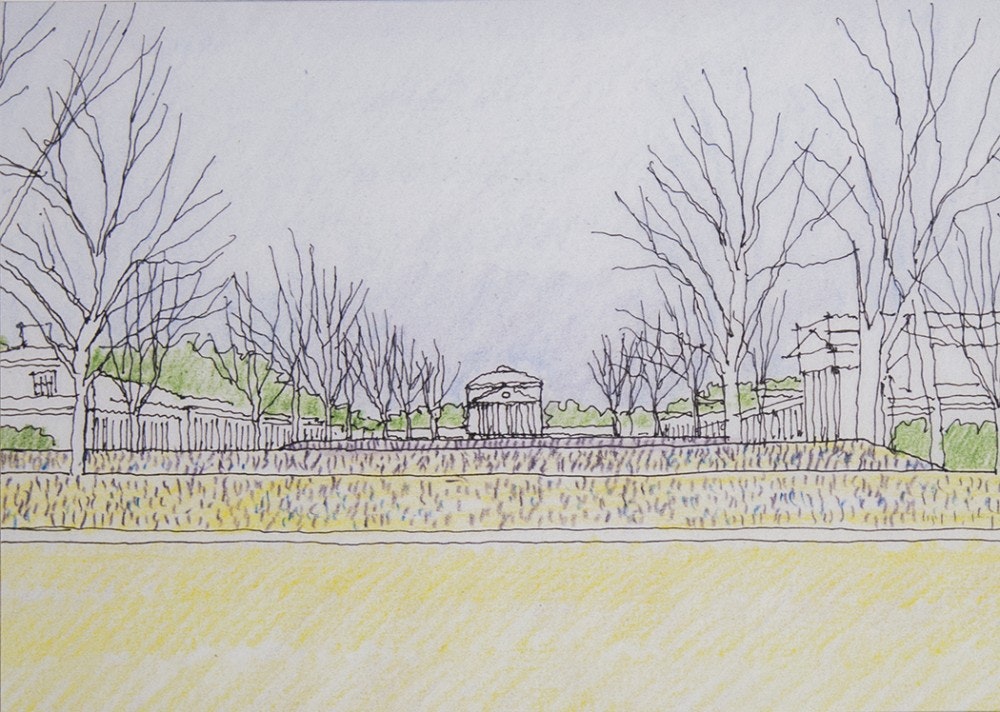
The Hush Harbor Memorial for Enslaved Laborers at the University of Virginia African American Heritage Center is a proposed open air space for all to gather.
This is not an exhaustive list, but does give a representation of the ways others are using to memorialize these spaces and to honor their memory. My goal is to find an original Hush Harbor that can be established to be authentic. However the fact that the idea of these enslaved African constructs being valued by mainstream society is evidence of the growth of their importance within the American psyche.
The best way to memorialize these spaces is to do it with respect and honor for the experiences that occurred within the Hush Harbor. Also the preservation of plantations and the surrounding landscapes is crucial.
We all know Harriet Tubman as a woman who guided enslaved peoples to freedom, traveling through the Underground Railroad. She was much more however. For the sake of this blog, the fact that she was also a healer and she visited and used Hush Harbors on her journeys, is discussed. There were other healers as well, but Harriet Tubman is the most well known. It makes sense and explains why she was able to make 19 trips deep into slave territory guiding the enslaved out of bondage without ever being detected. In a sense she used the Hush Harbors as a ‘subway station’ on the underground railroad. Her knowledge of these safe spaces, and how to ‘call’ her passengers to them was a secret weapon. Marilyn Mellowes PBS special “God in America – The black church” speaks of Harriet Tubman’s first escape occurring in 1849.
According to the Harriet Tubman Society “During the Civil War she worked as a nurse and a cook and her knowledge of local plants helped her cure soldiers with dysentery.” These healing skills had been developed as she assisted her passengers on the underground railroad.
Another mention of the healing practices within the Hush Harbor comes from the ‘slave narratives’. There are brief mentions of the enslaved coming to the Hush Harbor to meet up with the ‘Root Doctor’ due to arrive. The enslaved African’s knowledge of the roots, herbs, and African rituals would have been welcomed and trusted.
In her book “Secret cures of the slaves” Professor Londa Schiebinger speaks to the knowledge the enslaved possessed. Schiebinger explores aspects of African medicine that were not put to the test, such as Obeah and vodou. Her book speaks of African knowledge being blocked, discredited, or held secret.
The enslaved African was the primary sculptor of the plantation landscape and therefore they had a significant influence upon it. With such an influence it should be no shock that they could and would rebel and resist within the environment they found themselves. The enslaved used hidden routes to avoid, and evade the authority of the overseer, and the master, the enslaved also created secret ‘hiding’ spaces for personal belongings under the floors of their dwellings, and they created the secret worship spaces known as Hush Harbors.
In his book ‘Back of the Big House’ John Michael Vlach explains that “Paths also led from the slave quarters across the fields to a particular corn house or to some other food store that was known to have a conveniently lose board in its gable. A shortcut through the woods or marshlands that surrounded the fields may have allowed slaves from different plantations to rendezvous more conveniently and to return to their assigned tasks with less chance of detection.” This unauthorized use of the landscape was a display of resistance and it extended into the waterways such as streams and rivers as well.
As we began to learn more about the plantation landscape we should be mindful of these pathways that the enslaved co-opted, because they show an intent to resist, and they reflect active resistance by the enslaved. They also could point the way to a Hush Harbor.
Though an in-depth academic body of work is not available on Hush Harbors, there is a broad interest and conversation within the black church, the broader black community, and within the field of Archaeology.
Image of enslaved Gullah women ‘Hulling Rice’ from Georgia Archives – Vanishing GA
The best resource I have found in searching for these elusive spaces, has been the ‘slave narratives’ given to the WPA and housed in the Library of Congress. Here the ex-enslaved African recounted their experiences and ever-so-often would speak of the ‘Hush Harbor’ , as Peter Randolph from Virginia did when he stated “[At the Hush Harbor] the slave forgets all his sufferings…Thank G-d, I shall not live here always!” – What a powerful, yet brief and eloquent testament to the majesty of these spaces. No one can speak to them as those who constructed and attended them. We have an obligation still to attempt to find them.
Another great resource are the elder members of the black church. It was through an elder member of a black church that I first learned of Hush Harbors. Some of these people are old enough to have known great grandparents who were enslaved. They are like finding time capsules. My uncle is also one of these people, and I have sat with him for hours asking about any little nugget he may remember about his great grandfather Abe English who had been a young boy when the enslaved were emancipated in America. Though my uncle has not remembered anything our relative said about Hush Harbors, there are others who may remember, and their stories will add immensely to the record.
The broader community may also have information in the form of oral histories passed down through families. It only takes one person to value the story in their family that tells of those enslaved meeting late in the night at a specific location, for us to locate one of these sacred spaces. We have to know that our oral traditions and family stories have value and that they can impact the historic record in meaningful ways.
Finally, I have found that within the field of Archaeology great strides are being made in plantation excavations and specifically the habitations of the enslaved. Using the DAACS {Digital Archaeological Archive of Comparative Slavery} research can be found on slave scholarship. Elizabeth Clites of the Jefferson Foundation published an article in the African Archaeology Diaspora March 2009 newsletter explaining that although there are no exhaustive studies of slave sites in the Atlantic World (using data from DAACS) her analysis “has hopefully demonstrated that analysis of the Fairfield quarters provides clues and insights into slave culture as it existed in the American Colonies and Caribbean. [Slave] Quarter architecture and landscape manipulation, slaves’ access to imported goods, and evidence of Africa ritualism are all aspects of the Fairfield quarter that are shared with plantations within the Chesapeake and greater Atlantic region.”
As more is done to bring the memory of the slave experiences back into the public record, and as more escavations of plantations take place a Hush Harbor will be found and revealed. We will then be able to as John Michael Vlach stated “…to describe accurately and analyze fully the southern plantations as we remember the territorial prerogatives claimed and exercised repeatedly by the slaves.”
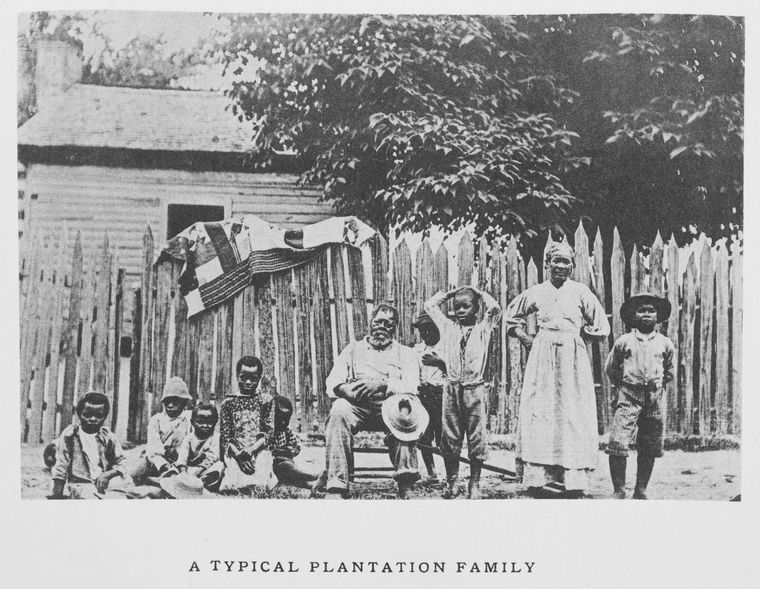
Photo from the Sarah and Angelina Grimke family who owned slaves
Hush harbors were secret spaces that the enslaved Africans created in wooded areas and swamps where they could go and freely express themselves through prayer, dancing, singing and preaching. The enslaved who worked long back breaking hours would walk miles in the late hours of the night to attend these clandestine meetings where others from neighboring plantations would also be in attendance. The recounts about the Hush Harbor experience by the enslaved described these meetings in the most admirable terms. They also told of the great risk taken to attend, and the slave code used to announce them. Steal Away, a code song which was often sung by the enslaved to call the secret meetings, has become a well known spiritual hymn. When listening to the coded spirituals and thinking about these meetings you get an insight into the life of the enslaved which is a rare opportunity.
The fact that the enslaved African is not prominent within the historical record and that they are mainly represented by way of their owners as property, makes it even more important that we study the existence of Hush Harbors to get a further insight into who the enslaved were and what they valued. What we know about Hush Harbors comes from the accounts of the enslaved who managed to escape and from the “slave narratives” given after emancipation. The actual Hush Harbor locations have been lost to history, but there is a ground swell of support to honor them through Hush Harbor Memorials. There has also been research in the field of Archaeology on plantation sites which are providing further insights using the found objects of the enslaved, paint colors of their habitations, as well as plantation layouts and the locations of the quarters of the enslaved. Further research on plantations is needed to search specifically for Hush Harbors. These new methods of peering into the lives of the enslaved are bringing them out of the shadows of history and restoring their humanity. The Hush Harbor that they created secretly is invisible yet ever present and stands as a representation of the resistance and resilience of the enslaved African. Speaking – Discussing – and Thinking about these sacred spaces provides a most powerful voice to a once silenced people.




 HUSH HARBORS